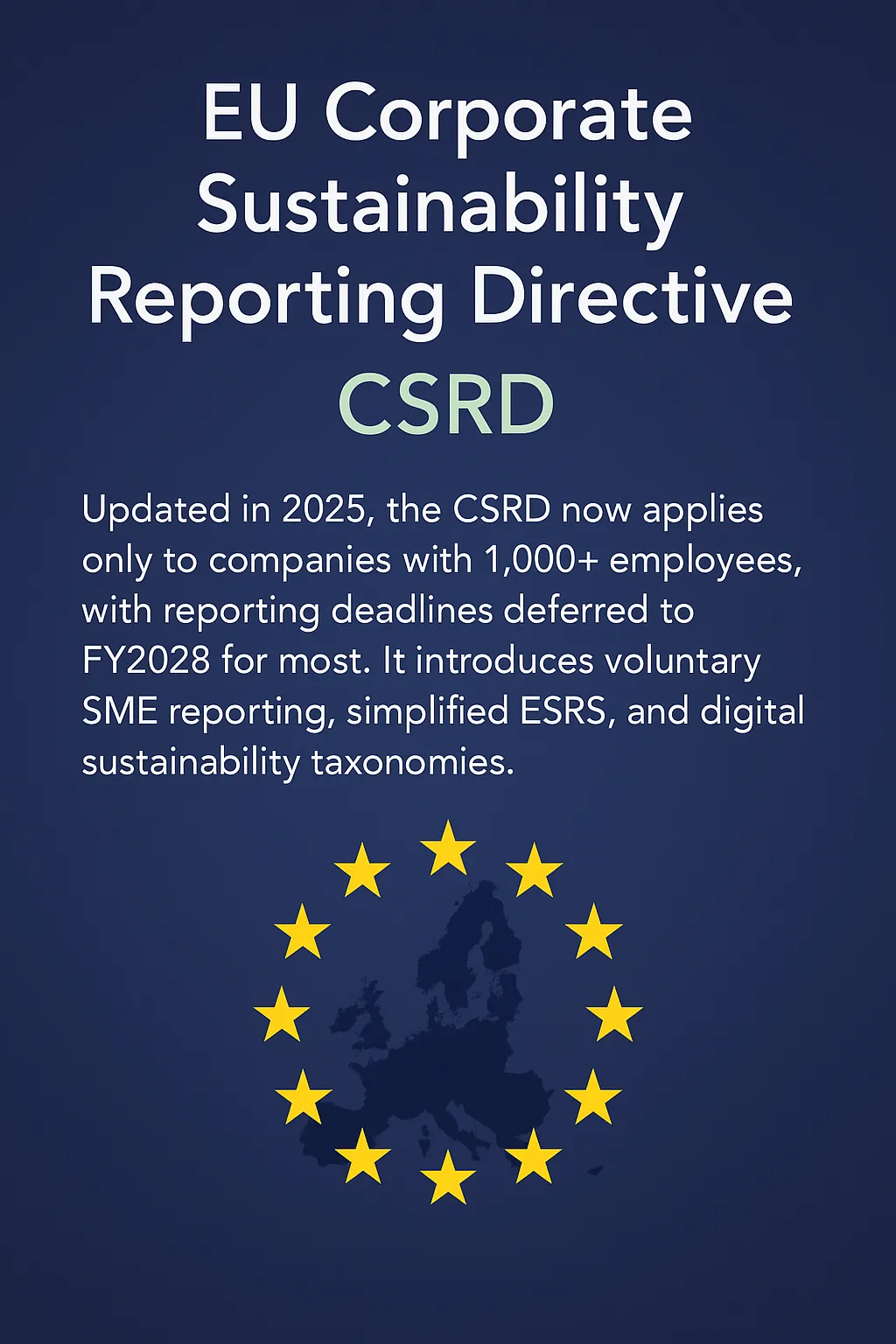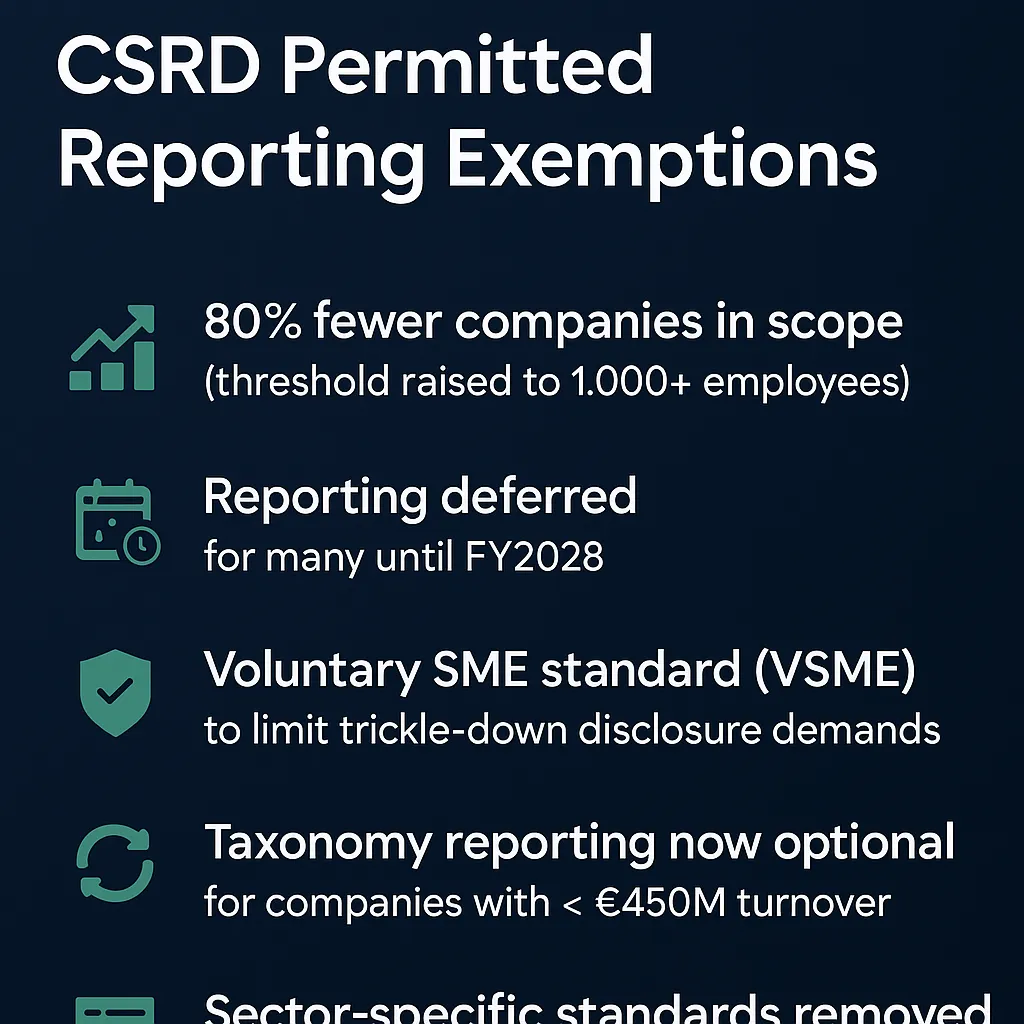
Commission Delegated Regulation (EU) 2026/1563, which replaces the ESRS set out in Delegated Regulation (EU) 2023/2772, was published in the Official Journal of the European Union on 21 September 2026, alongside Delegated Regulation (EU) 2026/1560 establishing the voluntary standard for undertakings outside CSRD scope. The act cleared its scrutiny period without objection. Entry into force is 10 November 2026, with mandatory application for financial years beginning on or after 1 January 2027 and first reports in 2028. The revision cuts mandatory datapoints by 61 percent, and by more than 70 percent once voluntary disclosures are stripped out. The value-chain cap applies from FY2027: large undertakings cannot require more than a short list of essential ESG datapoints from suppliers with 1,000 or fewer average employees.
Why it matters
Until 21 September the revised standards sat inside a scrutiny window, with one practical consequence: a report could not cite them as law. That constraint is gone, and it settles the FY2026 question. Three paths remain open for financial years beginning in 2026 — stay on the existing ESRS, early-adopt the revised standards in full, or stay on the existing set and apply selected reliefs from the revision — and the version applied must be clearly disclosed. For a second-year reporter with a working data pipeline, selective reliefs are usually cheapest; for a first-time reporter, early adoption avoids building to a text about to be superseded. Mid-market suppliers should read the value-chain cap as a defensible ceiling in customer data requests rather than an aspiration, and price disclosure-readiness work against FY2027 rather than the calendar.
What to watch
10 November 2026 entry into force, and national transposition acts that determine which reliefs are available in each member state.
Sources
- Linklaters Sustainable Futures: EU CSRD — revised ESRS and voluntary reporting standard are published in the Official Journal of the EU (21 Sep 2026)
- GRC Report: EU's Simplified Sustainability Reporting Standards Become Final (23 Sep 2026)
- ESG Today: EU Publishes Final Revised European Sustainability Reporting Standards in Official Journal (22 Sep 2026)